Lingam Massage Techniques: 7 Strokes to Try, With Names and When to Use Them

Lingam massage techniques are what turn a simple massage into something slow, varied and deeply connecting. If you already know the basics, learning a handful of named strokes gives you a vocabulary: you know what to try, when to change, and how to bring him back to calm before building again. Below are seven strokes that are widely taught in tantric and sensual massage, with clear guidance on when each one works best.
Key takeaways
- Lingam massage is about slow, varied touch and connection, not a race to orgasm.
- Seven core strokes cover warming up, building, calming and finishing.
- Generous oil or lube, warm hands and constant check-ins matter more than perfect technique.
- Consent comes first: agree on limits beforehand, and stop if anything hurts or feels uncomfortable.
Before you start: the foundations
If you are completely new, read our step-by-step lingam massage guide for beginners first. It covers preparation, setting the space and the overall flow. This article focuses on the strokes themselves.
A few foundations make every technique work better:
- Agree on intentions. Talk about what you both want, any limits, and whether orgasm is part of the plan or not. Agree on a word for "stop" and a word for "slower". He can change his mind at any time, and so can you.
- Use plenty of oil or lube. Friction is the enemy of pleasure. A natural massage oil feels lovely, but switch to a water-based lube if you plan to use latex condoms afterwards, because oil can weaken latex.
- Warm hands, short nails, no rings.
- Slow down. Slowness is the whole point. The idea of non-goal-oriented touch is also at the heart of sensate focus, the approach developed by sex researchers Masters and Johnson in 1970 and still widely used by sex therapists. You can read more in our guide to sensate focus exercises.
Lingam massage techniques: 7 strokes to try
Different teachers use slightly different names, so you may see these strokes called something else elsewhere. What matters is the movement and how it feels to him.
1. The Warm Welcome (resting hands)
How: After a full-body massage, simply rest one warm, oiled hand over the area without moving. Breathe slowly together for a minute.
When to use it: At the very start, and whenever you want to pause. It signals safety and presence. It is also the easiest way to calm things down if he is getting close to orgasm sooner than he wants.
2. Gentle Pull (one hand after the other)
How: With a relaxed, oiled hand, glide slowly from the base upwards, then let the other hand follow, so that one hand always takes over from the other. Keep the pressure light and even.
When to use it: Early on, to build arousal gradually. Its steady rhythm is soothing and gives him time to relax into the sensation.
3. The Twist (corkscrew)
How: As your hand glides up, add a slow, gentle rotation of the wrist, like turning a doorknob very softly. Glide back down and repeat.
When to use it: Once he is warmed up and you want to add variety. The rotation spreads sensation more widely than a straight stroke. Ask whether he prefers it slower or with less pressure.
4. Rolling Palms (sometimes called "fire starter")
How: Hold the shaft lightly between your two flat, oiled palms and slowly roll it back and forth, as you might warm your hands. Keep it very gentle.
When to use it: In the middle of a session, when you want a new, softer kind of sensation. Many people find it a pleasant change of texture after stroking.
5. Palm Circles (crown polish)
How: With a well-oiled, flat palm, make slow, light circles over the tip, as if gently polishing. The tip is often the most sensitive area, so keep pressure very soft and check in often.
When to use it: For short moments of intensity. Too much here can feel overwhelming, so use it in brief waves and return to gentler strokes afterwards.
6. Cupping and Cradling (testicles)
How: Gently cup the testicles in your palm, holding them with the warmth of your hand rather than any squeeze. You can lightly stroke the skin with your fingertips. The testicles are very sensitive to pressure, so be gentle and ask before doing more.
When to use it: Between strokes on the shaft, to spread pleasure to the whole area and to slow things down. Our article on erogenous zones on a penis explains why these nearby areas matter.
7. Perineum Press (the sacred spot)
How: Find the perineum, the area of skin between the testicles and the anus. With a lubed fingertip or knuckle, apply soft, steady pressure or slow circles. Ask how much pressure feels good. This is an external technique only.
When to use it: Towards the later part of a session, when he is relaxed and aroused. Some men find this area intensely pleasurable, others feel neutral. Both are normal.
Not sure where to start? Take the free 2-minute Pleasure Quiz and get lessons matched to your goal.
How to combine the strokes: a simple 30-minute flow
Here is one way to put the techniques together. Treat it as a starting point and adapt it to him.
- Full-body massage (10 minutes). Back, legs, chest and belly. Do not rush to the genitals.
- Warm Welcome (1 to 2 minutes). Rest your hand and breathe together.
- Gentle Pull and Twist (5 minutes). Build slowly, alternating the two.
- Cupping and Rolling Palms (5 minutes). Spread sensation and change texture.
- Palm Circles and Perineum Press (5 minutes). Short waves of intensity, followed by gentler strokes.
- Return to the Warm Welcome. Whenever he gets close and wants to slow down, pause, breathe and rest your hand, then start building again.
Building up and calming down in waves is similar to edging. If you want to explore this idea further, read our edging beginner's guide.
Reading his responses
Every body is different, so technique is only half of the skill. The other half is noticing and asking:
- Ask simple questions: "Softer or firmer?", "Slower?", "More of this?"
- Watch his breathing. Faster, shallower breathing often means arousal is rising. Invite him to breathe slowly with you.
- Listen to his words. If he says stop, stop straight away and check in. If something hurts, stop.
- Remember erections come and go. During a long, slow massage it is normal for an erection to soften and return. This is not a problem, and the massage can still feel wonderful.
Adapting the strokes to his body
No two bodies respond in the same way, so treat the seven strokes as a menu rather than a script.
- Foreskin or no foreskin. If he has a foreskin, the tip is often more sensitive, so very light palm circles, or gliding with the foreskin rather than over the tip, may feel better. If he is circumcised, he may enjoy a little more lube and a slightly firmer, but still gentle, touch. Ask rather than assume.
- Sensitivity changes during a session. A stroke that feels amazing early on may feel too intense later, and the reverse. Keep rotating between strokes.
- Positions for comfort. He can lie on his back with a pillow under his hips while you sit between his legs or beside him. Make sure you are comfortable too, so your hands stay relaxed.
- Energy and mood matter. If he is tired or stressed, spend longer on full-body massage and resting hands before anything else.
Common mistakes to avoid
- Too little oil or lube. Reapply often.
- Too much pressure, especially on the tip or testicles. Start lighter than you think and let him guide you.
- Rushing towards orgasm. The magic of lingam massage is in the slowness.
- Staying silent. Small check-ins keep both of you relaxed and confident.
- Forgetting the rest of the body. Return to the chest, thighs and belly often.
When to see a GP or doctor
- Pain during or after touch that does not settle.
- A new lump, swelling or change in the testicles. The NHS advises checking your testicles regularly and seeing a GP about any change.
- A new bend or curve, or pain with erections.
- Sores, unusual discharge, a rash or irritation. A sexual health clinic can help confidentially.
- Ongoing worries about erections. These are common and a GP can help.
Learn it step by step
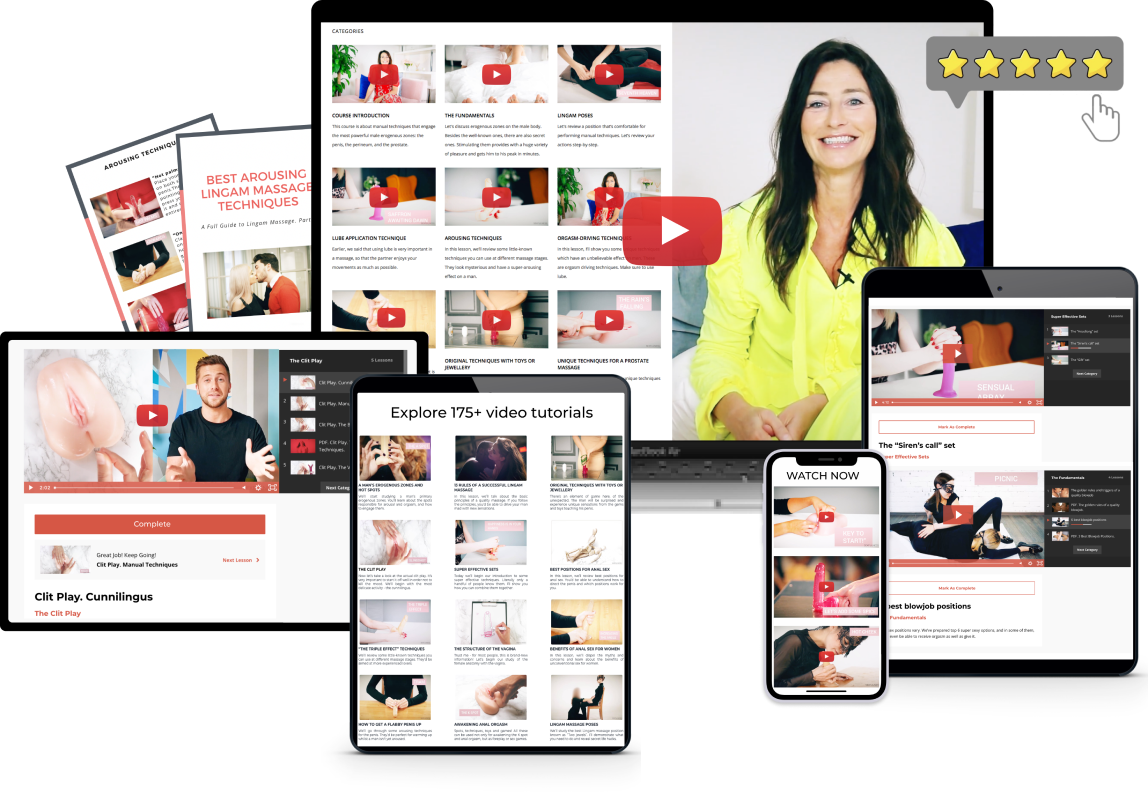
Strokes are much easier to learn when you can watch them. The Sexfulness video course A Full Guide to Lingam Massage walks you through every stroke in short, practical lessons, along with 175+ other lessons on pleasure and intimacy. Get full access →
For more ideas, see our guide on how to give a handjob.
Frequently asked questions
What are the main lingam massage techniques?
Commonly taught strokes include resting hands, one hand after the other, the twist, rolling palms, palm circles on the tip, cupping the testicles and gentle perineum pressure. Names vary between teachers.
How long should a lingam massage last?
Many couples take 30 to 60 minutes including a full-body massage, but even 20 slow minutes can feel very different from ordinary touch.
Does lingam massage have to end in orgasm?
No. Agree beforehand. Some couples include orgasm, others prefer to enjoy the waves of arousal and relaxation without a goal.
What oil is best for lingam massage?
A natural massage oil or a good lubricant. If you plan to use latex condoms afterwards, choose a water-based lube, because oil can weaken latex.
What if he loses his erection during the massage?
That is normal during long, slow touch. Keep going gently or pause and breathe. Erections often return, and pleasure does not depend on them.