4 Signs an Open Relationship Might Be a Good Choice for You

An open relationship is a committed partnership in which both partners agree that one or both of them may have sexual or romantic connections with other people. It is a form of consensual non-monogamy. It can work well when both people truly want it, set clear rules and keep talking honestly. It rarely works as a fix for a struggling relationship.
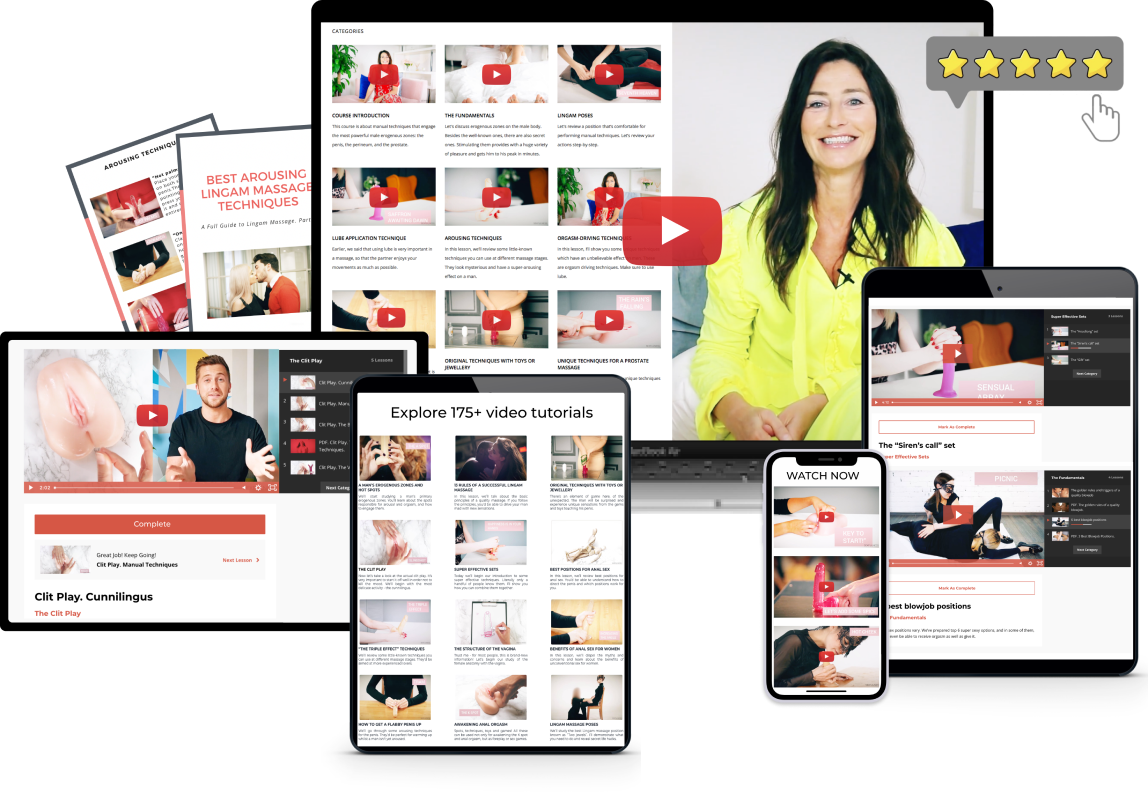
Before any rules or apps, there is one skill that decides whether an open relationship feels safe: talking about desire without blame. That is far easier to learn when you can see it. In our video course How to Talk About Sex every conversation step is shown on video, so you can watch tonight and try the first talk the same evening.
Key takeaways
- An open relationship is consensual: both partners agree, freely, and either can say no.
- The healthiest reasons are curiosity and shared values, not fixing problems or keeping a partner who wants out.
- Clear agreements, regular check-ins and safer sex (condoms, regular STI tests) matter more than any single rule.
- The core skill is honest, calm communication about needs, jealousy and boundaries.

Video course
How to Talk About Sex
30 short video lessons · 7-day practice plan · certificate
Learn how to share desires, hear a “no” without hurt, and talk about boundaries calmly.
Private account · watch on any device · cancel any time
In this guide
- What is an open relationship?
- What are the signs an open relationship might work for you?
- What are the pros of an open relationship?
- What are the risks and challenges?
- How do you set rules for an open relationship?
- How do you deal with jealousy?
- Learn it faster with video lessons
- Frequently asked questions
What is an open relationship?
An open relationship means partners stay together as a couple while agreeing that sex or dating with others is allowed under rules they both accept. The key word is agreement. Without it, it is simply cheating.
People use several labels. Some couples are “monogamish”, which means mostly exclusive with rare exceptions. Others are fully open, or polyamorous, which means having more than one loving relationship at once. Swinging usually means having sex with others together, as a couple.
Open relationship types at a glance
| Style | What it usually means | Emotional involvement with others |
|---|---|---|
| Monogamy | Sex and romance only with each other | None |
| Monogamish | Mostly exclusive, with agreed rare exceptions | Usually none |
| Open relationship | Sex with others allowed under agreed rules | Often limited by agreement |
| Swinging | Partners have sex with others together, as a couple | Usually limited |
| Polyamory | More than one loving relationship, with everyone informed | Yes, by design |
None of these is better or worse. Research suggests consensual non-monogamy is more common than many people think. In a large US study of single adults, about one in five said they had been in a consensually non-monogamous relationship at some point (Haupert and colleagues, 2017).

What are the signs an open relationship might work for you?
An open relationship is most likely to work when both of you want it for yourselves, trust each other, and can talk about jealousy without blaming. Here are four honest signs.
- You both feel curious, not pressured. The idea excites both of you. Nobody is agreeing just to avoid losing the other person.
- Your relationship feels secure right now. You trust each other, fights get resolved, and you feel close. Opening up tends to magnify what is already there, good or bad.
- You can talk about hard feelings. You can say “I felt jealous when…” and be heard, without the talk turning into a fight.
- You value honesty over comfort. You would rather hear an uncomfortable truth than be protected from it.
If you read this list and feel calm, that is a good sign. If you feel anxious or hope it will “fix” something, it may be worth working on the relationship first. For ideas, see our guide to communication and intimacy for couples.
What are the pros of an open relationship?
Couples who choose openness freely often describe more honesty, more freedom and fresh energy in their own bond. These are the most common benefits people mention.
- More freedom. Each partner can explore parts of their sexuality or personality without hiding them.
- Better communication. Openness only works with frequent, frank talks, and that skill often spills over into the rest of the relationship.
- Less pressure on one person. No single partner has to meet every need.
- Renewed desire. Some couples say that new experiences bring fresh energy home.
A review of the research by Rubel and Bogaert (2015) found that people in consensually non-monogamous relationships reported similar levels of relationship satisfaction and wellbeing to people in monogamous ones. That does not mean it suits everyone. It means it can be a healthy choice when it is a real choice.
What are the risks and challenges?
The biggest risks are hurt feelings from unclear rules, jealousy that goes unspoken, and sexual health risks if safer sex slips. All three can be managed, but none disappears on its own.
- Jealousy. It is normal, even in happy open couples. The goal is not to never feel it, but to talk about it kindly.
- Unequal wishes. If one partner wants it much more, the other can feel pushed. That builds resentment.
- Time and energy. New connections take time. Your main relationship still needs dates, attention and care.
- Sexual health. More partners means more exposure to STIs. Use condoms, get tested regularly and share results honestly. The NHS offers free, confidential testing at sexual health clinics.
What we teach in the course
In How to Talk About Sex we teach the conversation skills that make agreements like these possible. Three that couples find most useful:
- The “I” message. Instead of “You never…”, you say “I feel… when… and I would like…”. It turns blame into a request your partner can actually answer.
- Perception channels. Some people take in love mostly through words, others through touch or actions. Knowing your partner's channel helps you reassure them in a way they really feel.
- Avoiding the main pitfalls. The lesson “Main Pitfalls Of Partner Communication” covers the timing and tone mistakes that turn a calm talk into a fight.

From the video course How to Talk About Sex
How do you set rules for an open relationship?
Good rules are specific, agreed by both of you, and reviewed often. Write them down, try them for a few weeks, then talk again.
- What is allowed: flirting, kissing, sex, dating, sleepovers?
- With whom: strangers only, or friends too? Anyone off-limits, such as exes or colleagues?
- What you share: do you want to know details, a short summary, or nothing at all?
- Safer sex: condoms with every new partner, regular STI tests, and what happens if a condom breaks.
- A pause button: either partner can ask to pause or close the relationship at any time, and that request is respected.
A good first conversation is shorter than you think. Our guide on how to talk to your partner about sex walks you through choosing the moment and the first words.
How do you deal with jealousy?
Treat jealousy as information, not as a crime. It usually points to a need: more reassurance, more time together, or a rule that does not fit any more.
- Name it early: “I am feeling jealous, can we talk?”
- Look for the need underneath. Is it fear of being replaced, or simply missing your partner?
- Ask for something concrete, such as a date night after your partner sees someone new.
- Some people also feel “compersion”, which means feeling happy that their partner is happy with someone else. It is lovely if it comes, but you do not have to feel it.
✅ Try tonight: 3 small steps
- Each of you writes down, alone, what attracts you and what worries you about an open relationship.
- Share one point each, using an “I” message: “I feel… when I imagine… and I would like…”.
- Agree on one thing to read or watch together before you decide anything. No decision is needed tonight.
Not sure where to start? Take the free 2-minute Pleasure Quiz and get lessons matched to your goal.

Learn it faster with video lessons
Reading gives you the map. Watching gives you the feel. Agreements only work if you can talk about them. In How to Talk About Sex you see real conversation techniques demonstrated, step by step, so the next talk feels calmer.
What you'll be able to do after 7 days
- Share a desire or a worry using an “I” message, without blame.
- Recognise your partner's perception channel and reassure them in a way they feel.
- Spot and avoid the common pitfalls that turn talks into fights.
What's included
- 30 short lessons, each technique demonstrated on video
- A 7-day practice plan with one small step a day
- Private and discreet: watch on your own device, whenever suits you
- A certificate when you finish
or see everything included in full access
Private account · watch on any device · cancel any time
Frequently asked questions
What is an open relationship?
A committed relationship in which both partners agree that one or both may have sexual or romantic connections with other people, under rules they both accept.
Can an open relationship save a struggling relationship?
Usually not. Opening up tends to make existing problems bigger. It works best when the relationship already feels secure and both partners want it.
How do couples keep an open relationship safe?
With clear agreements, regular check-ins, condoms with new partners and regular STI testing, with results shared honestly.
Is it normal to feel jealous in an open relationship?
Yes. Jealousy is common. What matters is noticing it early, naming it kindly and asking for what you need.
Is it easier to learn these conversations from video?
For many people, yes. Seeing a calm conversation modelled is easier than imagining it from text. Our course How to Talk About Sex shows each step on video, and you can watch privately at your own pace.
Read next
Related: why your partner has not said “I love you” yet.
Sources
- Haupert M.L. et al. (2017). Prevalence of experiences with consensual nonmonogamous relationships. Journal of Sex & Marital Therapy.
- Rubel A.N., Bogaert A.F. (2015). Consensual nonmonogamy: psychological well-being and relationship quality correlates. Journal of Sex Research.
- Conley T.D. et al. (2017). Investigation of consensually nonmonogamous relationships. Perspectives on Psychological Science.
- NHS: Sexually transmitted infections (STIs)
How we write: our editorial standards
Last updated: November 2026