Female Orgasm: 12 Tips That Actually Help

If orgasm feels difficult, unpredictable or out of reach, you are far from alone. Many women struggle to climax, especially during intercourse. The reasons are rarely about being "broken". Most often they come down to the type of stimulation, enough arousal and a mind that can relax. Here are twelve practical tips.
1. Put the clitoris first
Most women need direct or indirect clitoral stimulation to orgasm. Penetration alone often does not provide it, which is completely normal.
2. Give arousal time
Arousal takes longer than many people expect. Extended foreplay helps the body get ready and makes orgasm more likely.
3. Learn what works alone first
Exploring your own body through masturbation is one of the most effective ways to learn what you need, which you can then share with a partner.
4. Keep it consistent
When something is working, keep the same rhythm and pressure. Changes near the peak often reset the build-up.
5. Use your breath
Slow, deep breathing helps you stay in your body. Some women find that tensing and releasing the pelvic floor muscles increases sensation.
6. Try a vibrator
Vibrators provide steady, intense stimulation and are used by many women, alone or with a partner.
7. Choose positions with clitoral contact
Woman on top, the coital alignment technique and rear-entry positions with added hand stimulation all help.
8. Let go of the goal
Pressure to orgasm is one of its biggest obstacles. Focus on pleasure and sensations rather than the finish line.
9. Quiet the inner critic
Worry about how you look or sound pulls attention away from pleasure. Dim lights or a blindfold help some women relax.
10. Communicate
Tell or show your partner what you like. Guiding their hand is often easier than explaining.
11. Strengthen the pelvic floor
Kegel exercises may improve sensation and orgasm intensity for some women.
Not sure where to start? Take the free 2-minute Pleasure Quiz and get lessons matched to your goal.
12. Check the medical side
Some medications, hormonal changes and health conditions affect orgasm. If you have never had an orgasm or it suddenly became difficult, talk to a GP, gynaecologist or sex therapist.
What the research says about the orgasm gap
A large US study of more than 52,000 adults (Frederick and colleagues, 2018) found that 95% of heterosexual men usually or always orgasm during sex, compared with 65% of heterosexual women and 86% of lesbian women. The difference was linked less to biology and more to what happens during sex. Women who orgasmed more often were more likely to receive more oral sex, have longer sex, report greater relationship satisfaction, ask for what they want, and try new positions. In other words, the orgasm gap is largely a knowledge and communication gap, and that is good news, because it can be closed.
The main types of female orgasm
- Clitoral: the most common route. Most women need some form of direct or indirect clitoral stimulation.
- Vaginal or "G-spot" orgasms: many researchers think these still involve the internal parts of the clitoris, which wrap around the vagina.
- Blended: clitoral and internal stimulation together, which many women describe as deeper.
- Multiple orgasms: possible for many women because there is often no long refractory period. Gentle, continued stimulation after the first orgasm can lead to more.
A simple practice plan for this month
- Week 1: solo exploration with no goal. Notice which kinds of touch feel best.
- Week 2: add a vibrator or a new technique, and practise slow breathing as arousal builds.
- Week 3: show a partner what you discovered, guiding their hand with yours.
- Week 4: try positions with clitoral contact or add a vibrator during partnered sex.
Common myths that get in the way
- "Women should orgasm from penetration alone." Most do not, and that is normal.
- "If I need a vibrator, something is wrong." Vibrators are simply a tool, used by millions of women.
- "Orgasm proves the sex was good." Pleasure, closeness and fun matter too, and pressure makes orgasm harder.
- "Faking it keeps things easy." It teaches your partner the wrong thing. Read more in why people fake orgasms.
More practical ideas: how to have stronger orgasms and the best positions for female pleasure.
Learn it step by step
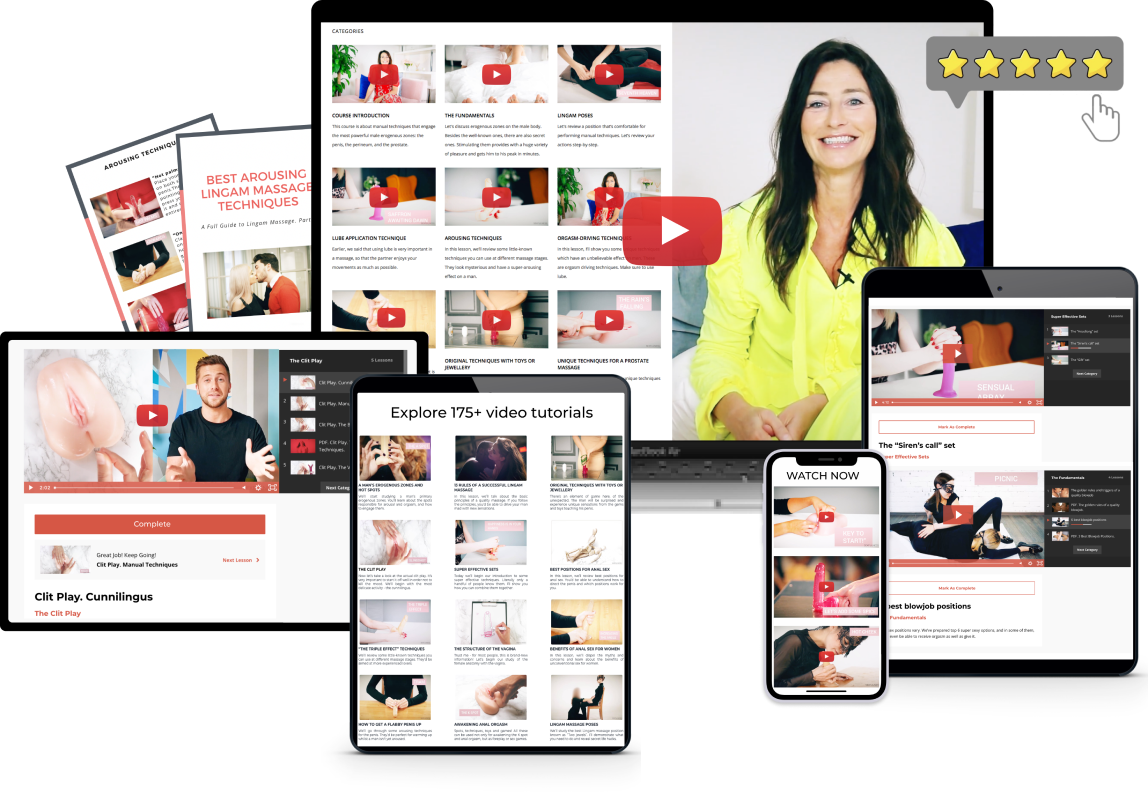
Techniques are easier to learn when you can watch them. The Sexfulness video course Sleeping Beauty: How to Awaken a Woman’s Sexuality walks you through it in short, practical lessons, alongside 175+ other lessons on pleasure and intimacy. Get full access →
Not sure where to start? Take the free 2-minute Pleasure Quiz and get a personal plan of lessons.
Frequently asked questions
Why is it hard for me to orgasm?
Common reasons include not enough clitoral stimulation, too little arousal time, stress and pressure to perform. Medical factors can also play a role.
Can every woman orgasm during sex?
Many women do not orgasm from penetration alone. Adding clitoral stimulation makes orgasm much more likely.
Do vibrators make it harder to orgasm without them?
There is no good evidence of that. Vibrators are a normal part of many people’s sex lives.
Why is it hard for women to orgasm during sex?
Common reasons are not enough clitoral stimulation, too little time for arousal, stress and distraction, and not communicating what feels good.
Can every woman have an orgasm?
Most women can learn to orgasm with the right stimulation, enough time and less pressure. If you never have, a doctor or sex therapist can help rule out medical causes.