
Clitoral vs Vaginal Orgasm: What's the Difference and How to Reach Each

The difference between a clitoral vs vaginal orgasm is mainly where the touch happens: a clitoral orgasm comes from stimulating the visible clitoris, a vaginal orgasm from touch inside the vagina. Research suggests the two overlap, because the clitoris reaches deep inside the body around the vagina. Most women need some clitoral touch to orgasm, and that is completely normal.
Part of our guide: Female Pleasure and Orgasm: The Complete Guide
Anatomy and technique are much easier to understand when you can see them. In our video course Sleeping Beauty, there is a separate lesson for each type of orgasm, explained step by step, so you can watch tonight and explore the same evening.
Key takeaways
- Clitoral and vaginal orgasms are named after where the touch happens, but both probably involve the clitoris, which is much bigger than it looks.
- In a large US survey, only about 18% of women said intercourse alone was enough for orgasm. Needing clitoral touch is the norm, not a problem.
- Many women describe vaginal orgasms as deeper and clitoral ones as sharper. Neither is "better" or more "mature".
- The easiest route to exploring both is high arousal, plenty of time and clitoral touch that keeps going during penetration.

From the video course Sleeping Beauty, which includes the lessons “Clitoral orgasm” and “Vaginal orgasm”
Video course
Sleeping Beauty: How to Awaken a Woman’s Orgasm
17 short video lessons · 7-day practice plan · certificate
Understand the 5 types of female orgasm and follow a clear, gentle plan to explore each one, alone or with a partner.
Private account · watch on any device · cancel any time
In this guide
- What is the difference between a clitoral and vaginal orgasm?
- Is a vaginal orgasm real? What research says
- Which one is more common?
- How do you have a clitoral orgasm?
- How do you have a vaginal orgasm?
- What is a blended orgasm?
- Why can't I have a vaginal orgasm?
- Learn it faster with video lessons
- Frequently asked questions
What is the difference between a clitoral vs vaginal orgasm?
The main difference is the route: a clitoral orgasm comes from touching the outer clitoris, a vaginal orgasm from pressure inside the vagina, usually on the front wall.
Many women also say they feel different. Clitoral orgasms are often described as sharp and focused. Vaginal orgasms are often described as deeper, slower and more spread through the body. These are personal descriptions, and plenty of women feel them in their own way.
| Clitoral orgasm | Vaginal orgasm | Blended orgasm | |
|---|---|---|---|
| Main touch | The glans of the clitoris and its hood | Inside the vagina, often the front wall (G-spot area) | Both at the same time |
| How women often describe it | Sharp, focused, quicker to build | Deeper, fuller, slower waves | Intense and layered |
| How common | The most common route for most women | Less common, and some women never have one | Common when clitoral touch continues during sex |
| What helps most | Steady, consistent rhythm and enough time | High arousal first, lube, slow pressure | Hand or toy on the clitoris during penetration |
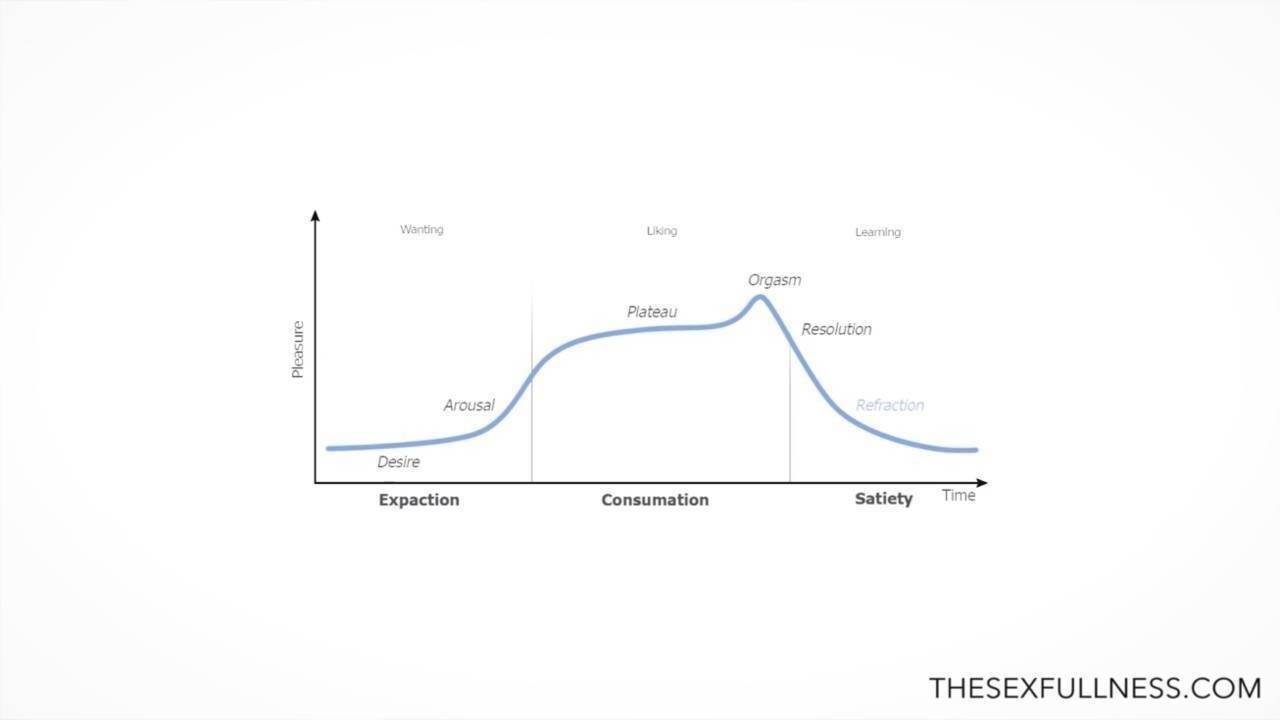
From the lesson “Stages of arousal” in Sleeping Beauty
Is a vaginal orgasm real? What does research say?
Women really do report orgasms from vaginal touch. What scientists debate is whether these are truly separate from clitoral orgasms, or the same clitoris reached from inside.
In 1905, Sigmund Freud claimed that vaginal orgasms were the "mature" kind and clitoral ones were childish. This idea did a lot of harm and has no scientific basis. In their 1966 lab studies, Masters and Johnson found the body goes through the same orgasm response whatever kind of touch starts it.
Later anatomy work changed the picture again. O'Connell and colleagues (2005) showed that the clitoris is far larger than the small glans you can see. Its inner parts, the legs and bulbs, wrap around the urethra and the vagina.
An ultrasound study by Buisson and Foldès (2009) found that during penetration, the inner clitoris moves and is pressed by the front vaginal wall. That may explain why internal touch can feel so good. A "vaginal" orgasm may often be the clitoris, stimulated from the inside.
Not every expert agrees on the labels. In a 2012 debate paper, Jannini and colleagues set out the evidence for one type of female orgasm, two types, or several. What everyone agrees on is simpler: any orgasm you enjoy is a real one. Our map of the G-spot, A-spot and U-spot explains the internal zones in more detail.
Which is more common, clitoral or vaginal orgasm?
Clitoral orgasm is far more common. Most women need direct clitoral touch, or find orgasm easier with it, including during sex.
In a 2018 US survey of over 1,000 women, Herbenick and colleagues found that 18.4% said intercourse alone was enough for orgasm. 36.6% said clitoral stimulation was necessary, and another 36% said orgasms felt better with it.
So if you orgasm from clitoral touch and not from penetration, you are in the majority. Our female orgasm tips explain why the clitoris deserves first place.
How do you have a clitoral orgasm?
Relax, build arousal slowly, then use a steady, gentle rhythm on or around the clitoris and keep it going without changing too much.
- Make time and space. A warm room, no rush and no goal. Pressure to perform is one of the biggest blocks to orgasm.
- Start around it, not on it. Touch the inner thighs, the outer and inner lips and the area above the hood first.
- Add lube. Even a little makes touch smoother and more comfortable.
- Find a simple motion. Small circles, side-to-side or up-and-down strokes over the hood. Many women prefer indirect touch through the hood at first.
- Keep it steady. When it starts to feel good, keep the same pace and pressure. Changing too soon often resets the build-up.
- Breathe. Slow, deep breaths help you stay in your body. Our guide to orgasm breathing shows how.
If you are learning alone first, our gentle guide on how to masturbate as a woman walks you through it.
What we teach in the course
Three things from Sleeping Beauty that most "clitoral vs vaginal" articles leave out:
- Not two types, but five. The course covers clitoral orgasm, vaginal orgasm, squirting, orgasm from breast stimulation and multiple orgasms, each in its own lesson.
- Anatomy before technique. “Anatomy of an orgasm” explains how the clitoris works, the only organ whose sole purpose is pleasure, before any orgasm lesson begins.
- Clitoral first, on purpose. The types of orgasm start with “Clitoral orgasm”, the most common one, with a step-by-step plan. In the 7-day practice plan, Day 5 is exploring on your own with the clitoral stimulation guide, with no goal and no rush.
🎥 Want to see it done step by step?
In Sleeping Beauty you can follow “Anatomy of an orgasm”, then “Clitoral orgasm” and “Vaginal orgasm”, with clear diagrams and an easy pace you can repeat as often as you like.
Watch the course trailer
Private account · watch on any device · cancel any time
How do you have a vaginal orgasm?
Wait until arousal is high, use lube, and try slow, firm pressure on the front wall of the vagina while keeping some clitoral touch in the mix.
- Arousal first. When a woman is very turned on, the vagina lengthens and the inner clitoris swells, so internal touch feels much better. Our guide to the stages of female arousal explains this.
- Fingers before penetration. One or two lubricated fingers, palm up, with a slow "come here" curl about 3 to 5 cm inside, give the most control.
- Pressure, not speed. Broad, rocking pressure usually works better than fast rubbing.
- Choose positions that hit the front wall. Her on top, leaning forward, or lying on her back with a pillow under the hips both help. Being on top also lets her control depth and rhythm. See our top positions for female pleasure.
- Keep the clitoris involved. A hand or small toy on the clitoris makes internal sensations stronger for most women.

From the lesson “When's the best time to awaken sexuality” in Sleeping Beauty
✅ Try tonight: 3 small steps
- Give yourself, or your partner, 20 unhurried minutes with no goal of orgasm.
- Start with slow circles over the clitoral hood, and keep the rhythm steady once it feels good.
- When arousal is high, add one finger on the front wall and keep clitoral touch going. Notice how the two feel different, and together.
What is a blended orgasm?
A blended orgasm comes from clitoral and vaginal stimulation at the same time. Many women find it the most intense, and it is often the easiest way to enjoy penetration more.
You can create it with a hand on the clitoris during sex, a small vibrator between your bodies, or positions where her clitoris grinds against her partner's pubic bone. Slow, rocking movements usually work better than deep thrusting.
Our guide to the mini amplitude technique shows a simple way to keep clitoral contact during sex.
Why can't I have a vaginal orgasm?
Usually because the clitoris is doing most of the work, which is how most bodies are built. Too little arousal, tension and pressure to perform also make internal touch feel flat.
- Anatomy varies. A 2011 analysis by Wallen and Lloyd found that women whose clitoris sits closer to the vaginal opening were more likely to orgasm from intercourse alone. Bodies differ, and that is no one's fault.
- Not enough warm-up. Internal zones often stay quiet until arousal is high.
- Overthinking. Watching yourself instead of feeling makes orgasm harder. Our guide on how to stop overthinking during sex can help.
- The wrong goal. Chasing a "vaginal" orgasm can turn sex into a test. An orgasm with clitoral touch is not second best.

Every body has its own map. Learn more in Sleeping Beauty
Not ready yet? Watch 2 free video lessons and see how we teach before you decide.
Safety and comfort. Go at your own pace, agree that either partner can stop at any time, use lube, keep nails short and hands clean, and stop if anything hurts. Use condoms or test together to protect against STIs.
When to see a GP or doctor
- Sex or internal touch is painful, burning or sore. Pain is a sign to stop and get checked.
- You have never had an orgasm, or it has become much harder, and this worries you. A GP can help or refer you to a sex therapist.
- Orgasm or desire changed after starting a medicine. The NHS notes that some medicines, such as antidepressants, can affect sex drive.
- You notice bleeding after sex, or unusual discharge, smell or itching.
“We know for sure how to bring bright orgasms to each other.”
Elizabeth, from our reviews
Learn it faster with video lessons
Reading gives you the map. Watching gives you the feel. In Sleeping Beauty you see how female orgasm works on clear diagrams and get a step-by-step plan for each type, so exploring feels relaxed instead of confusing.
What you'll be able to do after 7 days
- Understand your own arousal and know what helps it build.
- Use a steady clitoral technique that works with your body, not against it.
- Explore internal and blended orgasms gently, alone or with a partner.
What's included
- 17 short lessons, each technique demonstrated and explained on video
- A 7-day practice plan with one small step a day
- Private and discreet: watch on your own device, whenever suits you
- A certificate when you finish
or see everything included in full access
Private account · watch on any device · cancel any time
Frequently asked questions
Is a vaginal orgasm better than a clitoral orgasm?
No. They can feel different, but neither is better, healthier or more "mature". The best orgasm is the one that feels good to you.
What percentage of women can orgasm from penetration alone?
In a 2018 US survey by Herbenick and colleagues, about 18% of women said intercourse alone was enough for orgasm. Most women need or prefer clitoral touch as well.
Can you have a clitoral and vaginal orgasm at the same time?
Yes. Combining both kinds of touch is often called a blended orgasm, and many women find it the most intense. A hand or toy on the clitoris during penetration is the simplest way to try it.
How do I know which type of orgasm I had?
Notice what touch led to it and where you felt it. Clitoral orgasms often feel sharper and more focused, vaginal ones deeper and more spread out. Many orgasms are a mix, and the label matters far less than the pleasure.
Is it easier to learn this from video?
For many people, yes. Anatomy and rhythm are easier to grasp when you can see them. Our Sleeping Beauty video course has a lesson for each type of orgasm and a 7-day practice plan. This guide is still a complete place to start.
Read next
Sources
- Masters, W. H. and Johnson, V. E. (1966). Human Sexual Response. Little, Brown.
- O'Connell, H. E. and colleagues (2005). Anatomy of the clitoris. Journal of Urology, 174(4).
- Buisson, O. and Foldès, P. (2009). The clitoral complex: a dynamic sonographic study. Journal of Sexual Medicine, 6(5).
- Jannini, E. A. and colleagues (2012). Female orgasm(s): one, two, several. Journal of Sexual Medicine, 9(4).
- Wallen, K. and Lloyd, E. A. (2011). Female sexual arousal: genital anatomy and orgasm in intercourse. Hormones and Behavior, 59(5).
- Herbenick, D. and colleagues (2018). Women's experiences with genital touching, sexual pleasure, and orgasm. Journal of Sex and Marital Therapy, 44(2).
- NHS: Low sex drive (loss of libido)
How we write: our editorial standards
Last updated: November 2026


